T-1d 6h
Go
Results in 24h
- Success Long March 8A | SatNet LEO Group 28



Japanese companies in the space industry, organised by business area. Listing is free.



Next Launches
View all →
T-1d 6hGo
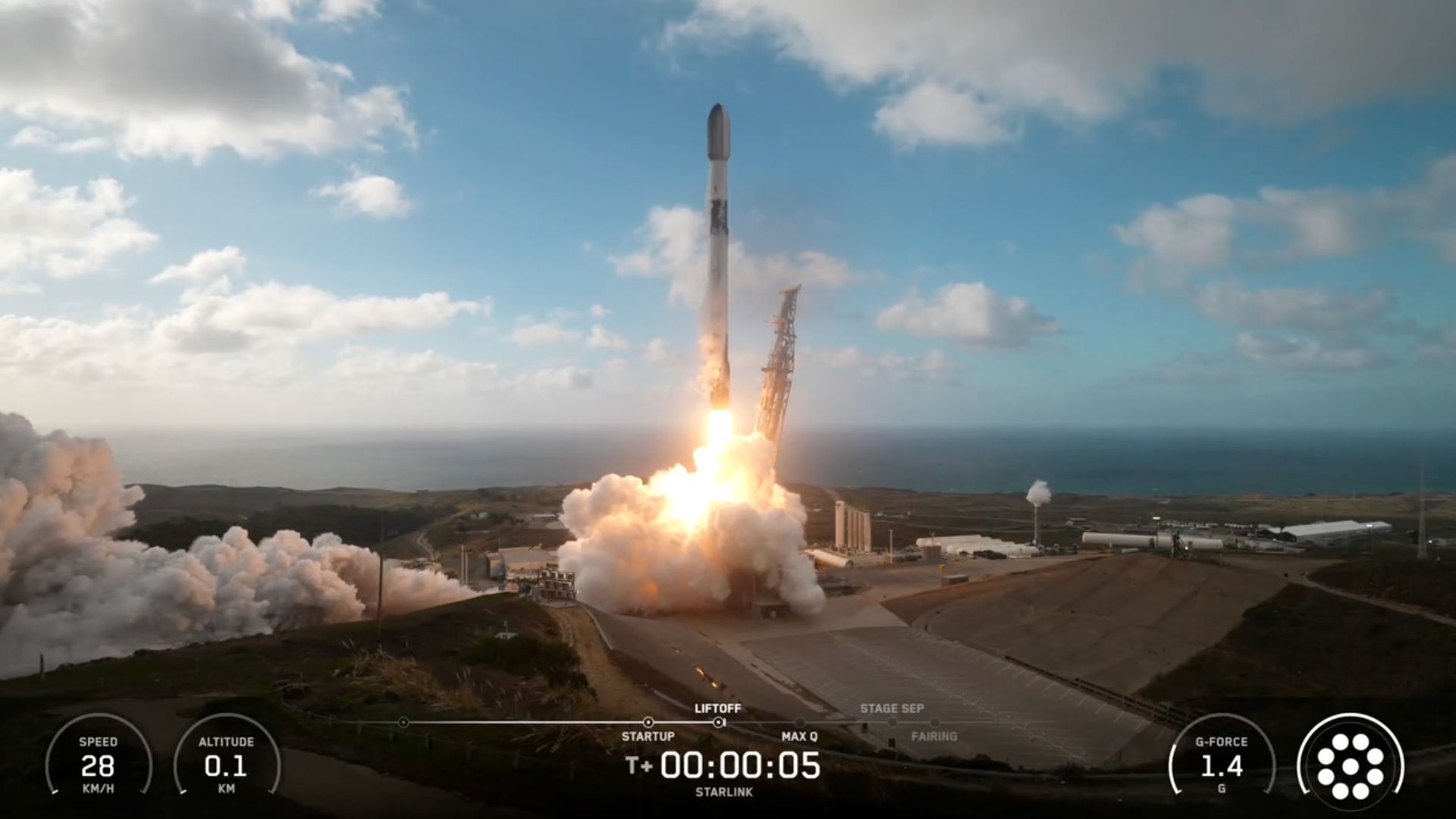
Falcon 9 Block 5 | Starlink Group 15-16
Oct 27, 2026 04:45 UTC · Vandenberg SFB, CA, USA
T-4d 5hGo
Falcon 9 Block 5 | Starlink Group 15-18
Oct 30, 2026 04:02 UTC · Vandenberg SFB, CA, USA
T-4d 18hTBC
GSLV Mk II | IRNSS-1L (NVS-03)
Oct 30, 2026 17:00 UTC · Satish Dhawan Space Centre, India

What’s Happening in Space Policy October 25-November 1, 2026
SpacePolicyOnline.com

Possible Roberts Road Expansion as SpaceX pushes for Flight 16
NASASpaceflight
 Illustrative image
Rare Lunar Meteorites Could Fill Gaps In Moon’s Evolution
Universe Today



NASA Artemis Update: SLS Stacking, Sortie Suit, Dual 2028 Paths
NASASpaceflight
 Illustrative image
White Dwarfs Are Actually…Yellow, Green, Pink, and Purple?
Universe Today
TOPICS
Browse by Topic
#Space Science
1640
Astronomy, planetary science, and astrophysics
#Human Spaceflight
1163
Astronauts, the ISS, and life in orbit
#Space Business
638
Funding, contracts, and the space industry
#Rockets
600
Launch vehicles, engines, and reusability
#Moon
582
Lunar exploration, landings, and the Artemis program
#Satellites
578
Satellites, constellations, and Earth observation
#Mars
279
Mars exploration, rovers, and crewed Mars plans
#Japan in Space
96
JAXA, Japanese companies, and national space policy
Boosted Dark Matter Directionality in Large Liquid Scintillator Detectors
Light dark matter can be boosted by cosmic-ray-dark matter interactions, which opens the possibility of direct-detection searches with large neutrino detectors. We consider the signal produced by boosted dark matter undergoing quasi-elastic scattering off carbon and knocking out a neutron in a large liquid scintillator detector. A distinctive delayed gamma ray from neutron capture can be reconstructed after $\sim 210$ $μ$s, which is paired up with the prompt signal during neutron propagation. We…
Odd radio circle J1555+2726: Observational evidence for shock re-acceleration of fossil plasma
Context. Odd radio circles (ORCs) are peculiar extragalactic sources recently discovered. They are characterised by one or more bright rings extending on scales of hundreds of kiloparsecs, and are filled with fainter emission. A massive elliptical galaxy lies at the centre of ORCs. While their formation mechanism is debated, a shock is plausibly involved. Aims. We aim to constrain the nature of ORC J1555+2726 (ORC4) through the analysis of its morphological and spectral properties. Methods. We u…
Magnetic Activity as a Driver of Low-gravity-like Spectral Morphology in Late-M Dwarfs
We present a systematic investigation of the connection between magnetic activity and the low-surface-gravity-like near-infrared spectral morphology of late-M dwarfs. Our sample includes TRAPPIST-1 observed with JWST NIRISS/SOSS and 22 late-M dwarfs observed with IRTF/SpeX, together with flare observations from K2, TESS, JWST NIRISS/SOSS, and literature-reported X-ray luminosities. Using one-component PHOENIX/NewEra spectral modeling, we find that all targets are better reproduced by lower-surfa…