Neutrons, rotating black holes, and a galactic PeVatron at the center of the Milky Way #Space Science2026.10.06 Phys.org
Illustrative image New Simulations Connect the First Galaxies to the Universe We See Today #Space Science2026.10.05 Universe Today
Astronomers catch a star slowly snacking on a brown dwarf, 300 light years away #Space Science2026.10.05 Phys.org
Illustrative image Chandra X-ray Observatory Drops New View of our Galaxy’s Unruly Centre #Space Science2026.10.05 Universe Today
Illustrative image Neutrons, Rotating Black Holes, and a Galactic PeVatron at the Center of the Milky Way #Space Science2026.10.05 Universe Today
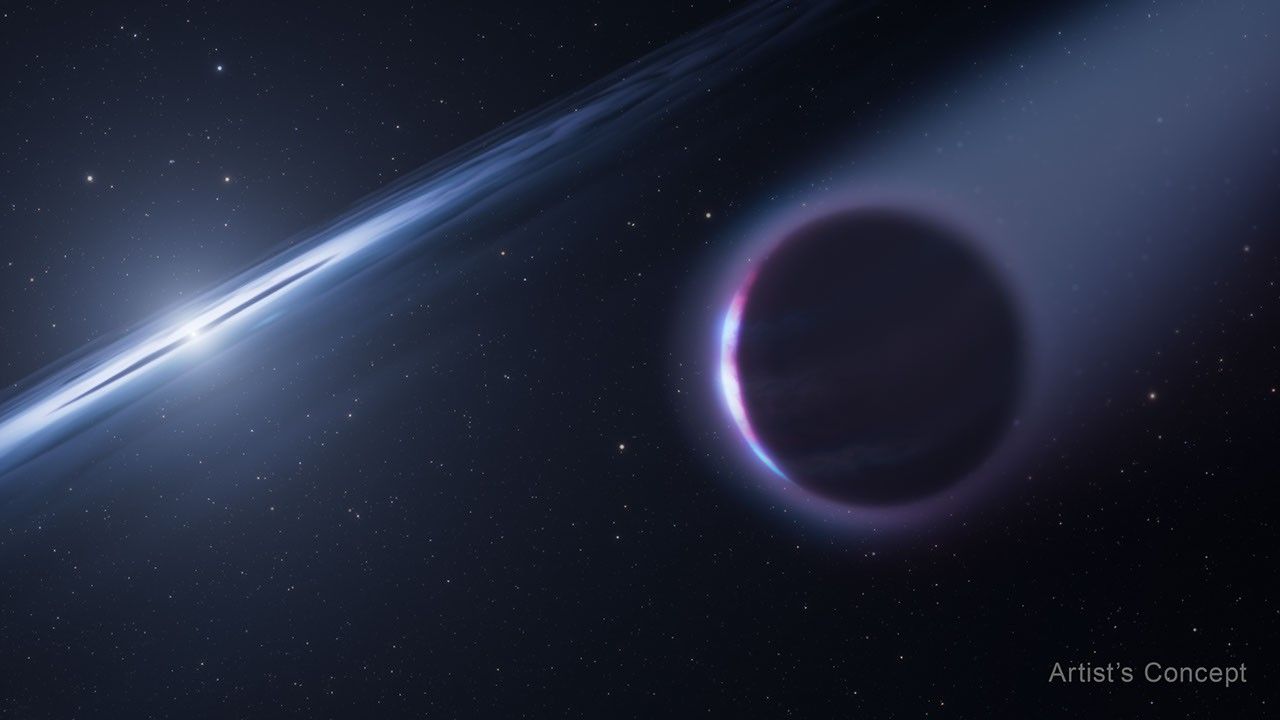
The phoenix planet: Astronomers find a world reborn from its star's ashes #Space Science2026.10.05 Phys.org
Illustrative image XRISM Makes First-Ever Detection of a Pulsar Feeding from a Companion's Stellar "Wind" #Space Science2026.10.04 Universe Today
Gamma-ray search sets new limits on dark matter annihilation in the inner Milky Way #Space Science2026.10.04 Phys.org
ESA to pursue crew transport and space stations as European launchers come online #Human Spaceflight2026.10.03 NASASpaceflight
Illustrative image Starlink launches Communities Program for passive income through internet sharing #Satellites2026.10.03 Teslarati
Milky Way may have begun as thousands of galaxies, new simulations suggest #Space Science2026.10.03 Phys.org
Black holes may grow quietly alongside galaxies even without violent mergers #Space Science2026.10.02 Phys.org
How stars shine: Infrared observations expose gaps in models of how stars distribute their light #Space Science2026.10.02 Phys.org
Astronomers discover the lowest-mass double neutron star system to date #Space Science2026.10.02 Phys.org
Illustrative image Asteroid Bennu Has an Identity Crisis, and Jupiter Might Be to Blame #Space Science2026.10.02 Universe Today
Illustrative image NASA's First Selection for a New Class of Mission: The PRIMA Far-Infrared Telescope #Space Science2026.10.01 Universe Today
Illustrative image NASA's Hubble Marks its 200,000th Orbit by Watching Lensed Supernova #Space Science2026.10.01 Universe Today